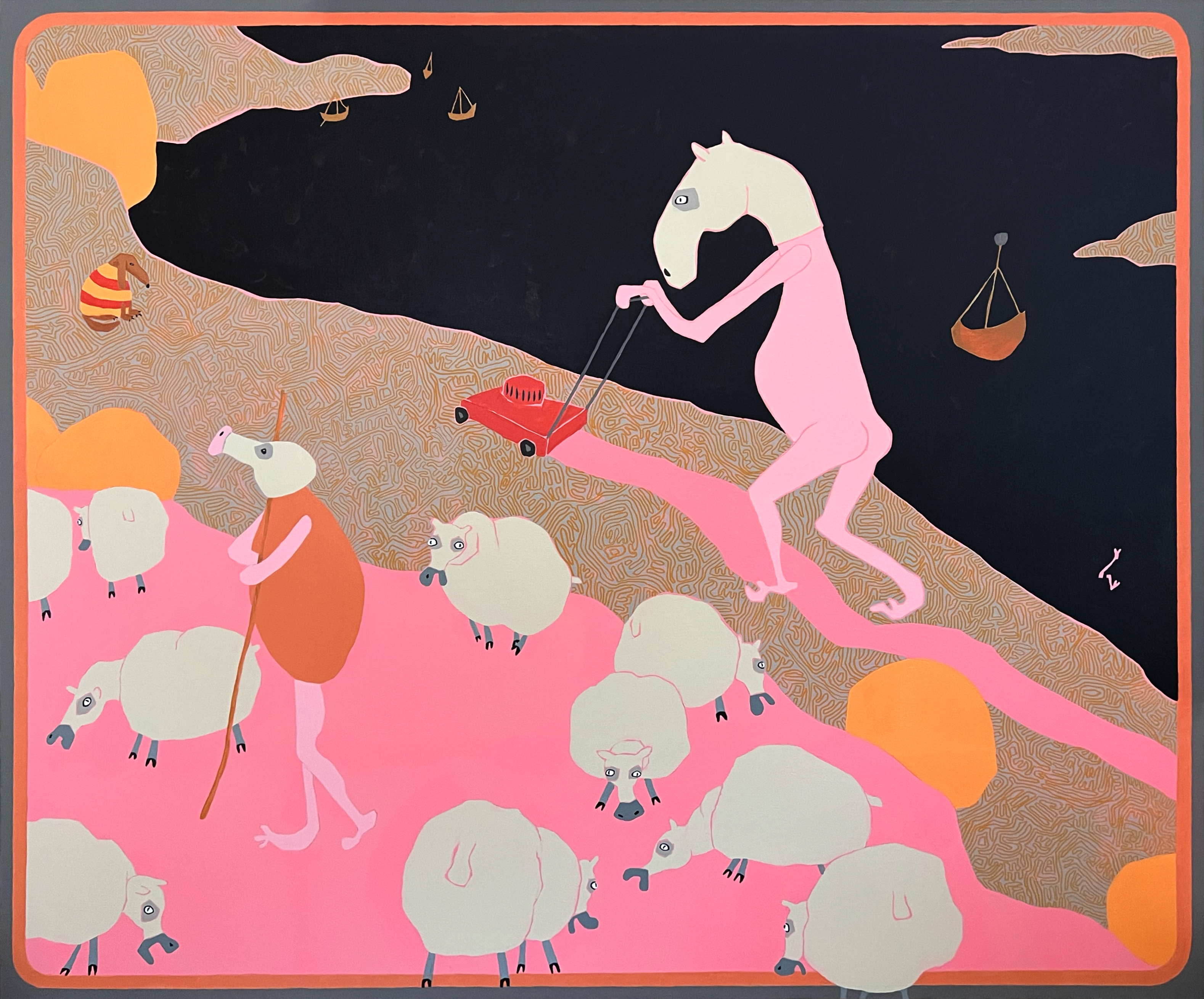
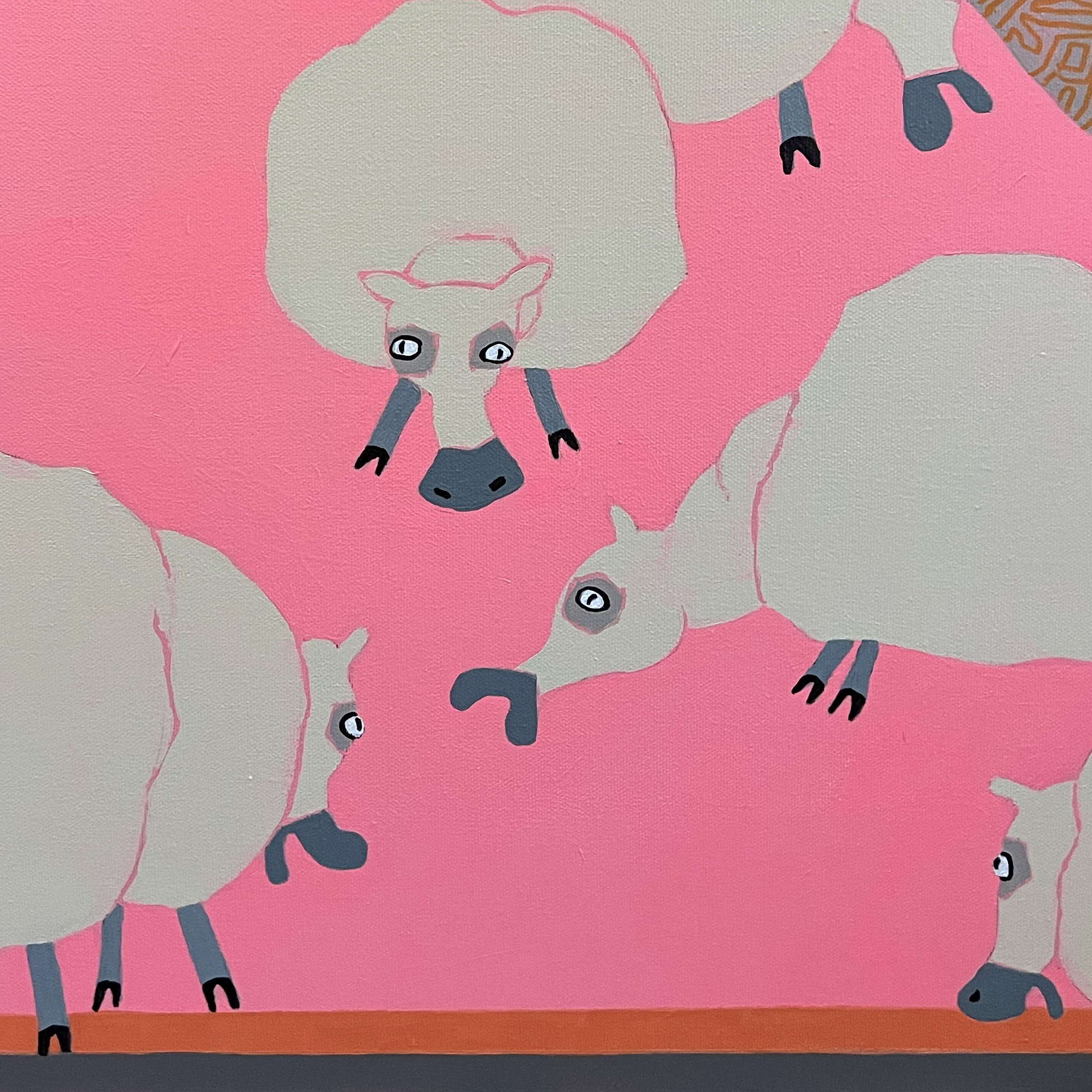
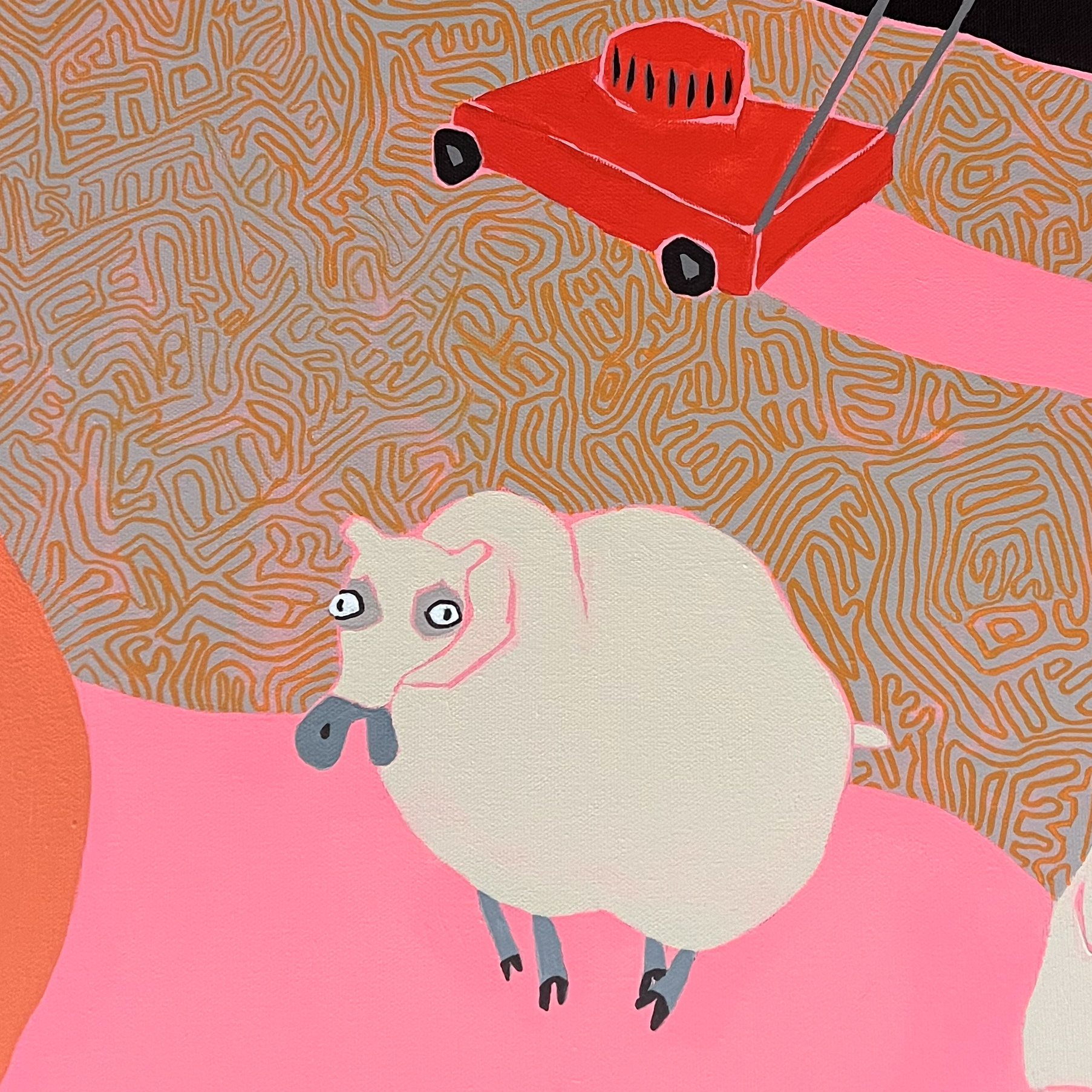
the mower (after Bruegel’s Landscape w the Fall of Icarus)
101x122cm / 40×48″ acrylic on stretched canvas, 2026
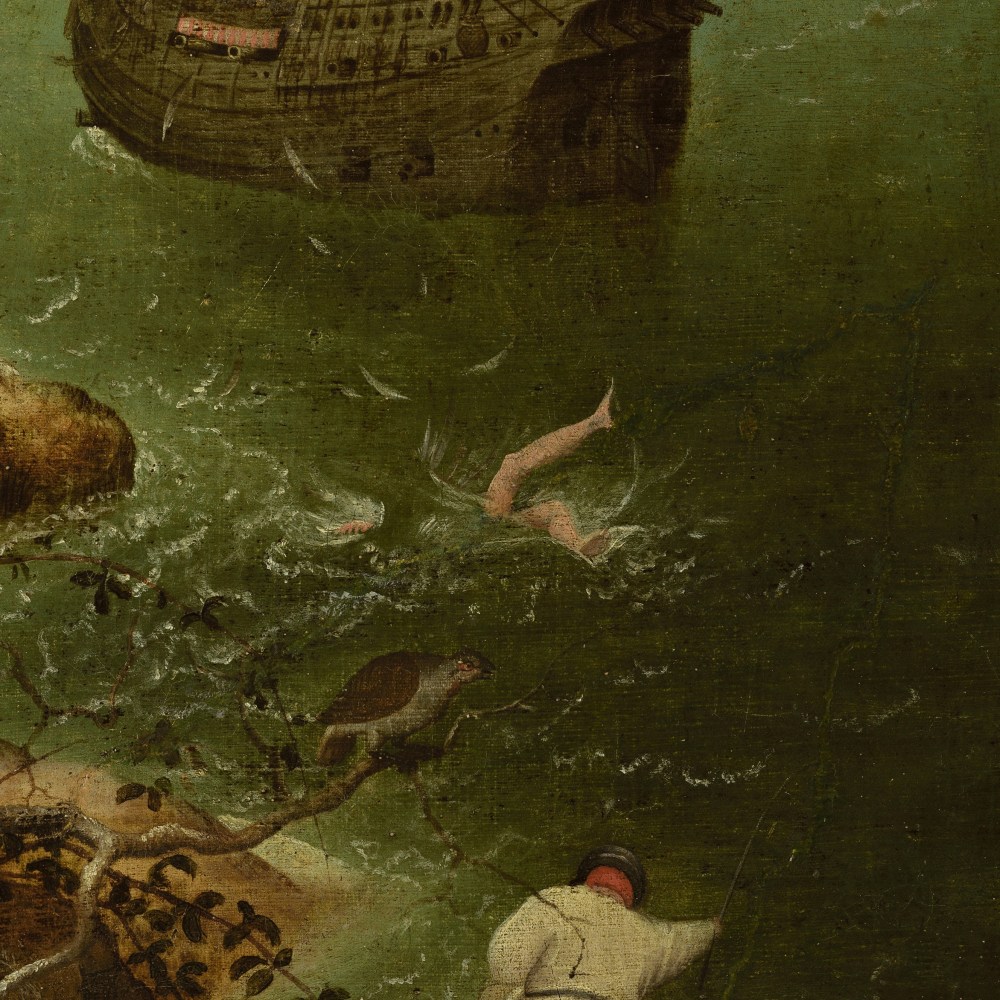
the mower is referencing Pieter Bruegel’s only known mythological painting, Landscape with the Fall of Icarus from c. 1560.

In the myth of Icarus, Daedalus made wings of feathers and wax for his son Icarus to escape entrapment on Crete, but warned him against flying too high & close to the sun, for the sun would melt the wax on his wings. Icarus, exhilarated with flight & feeling like a god, did not heed his father’s warnings & flew higher & higher. The hot sun melted the wax, & in proper Greek tragedy form, Icarus plunged to his death in the sea.
In Bruegel’s depiction of this grandiose myth, Icarus appears only as a tiny pair of legs in bottom right corner of the painting, thrashing as he dies in the sea. Icarus’ epic death goes completely unnoticed by all the other figures in the painting. Whether this is due to apathy, ignorance, or the banality of the everyday, the grandiose tale & the warning of hubris are just as lost as Icarus’ life is to the sea.
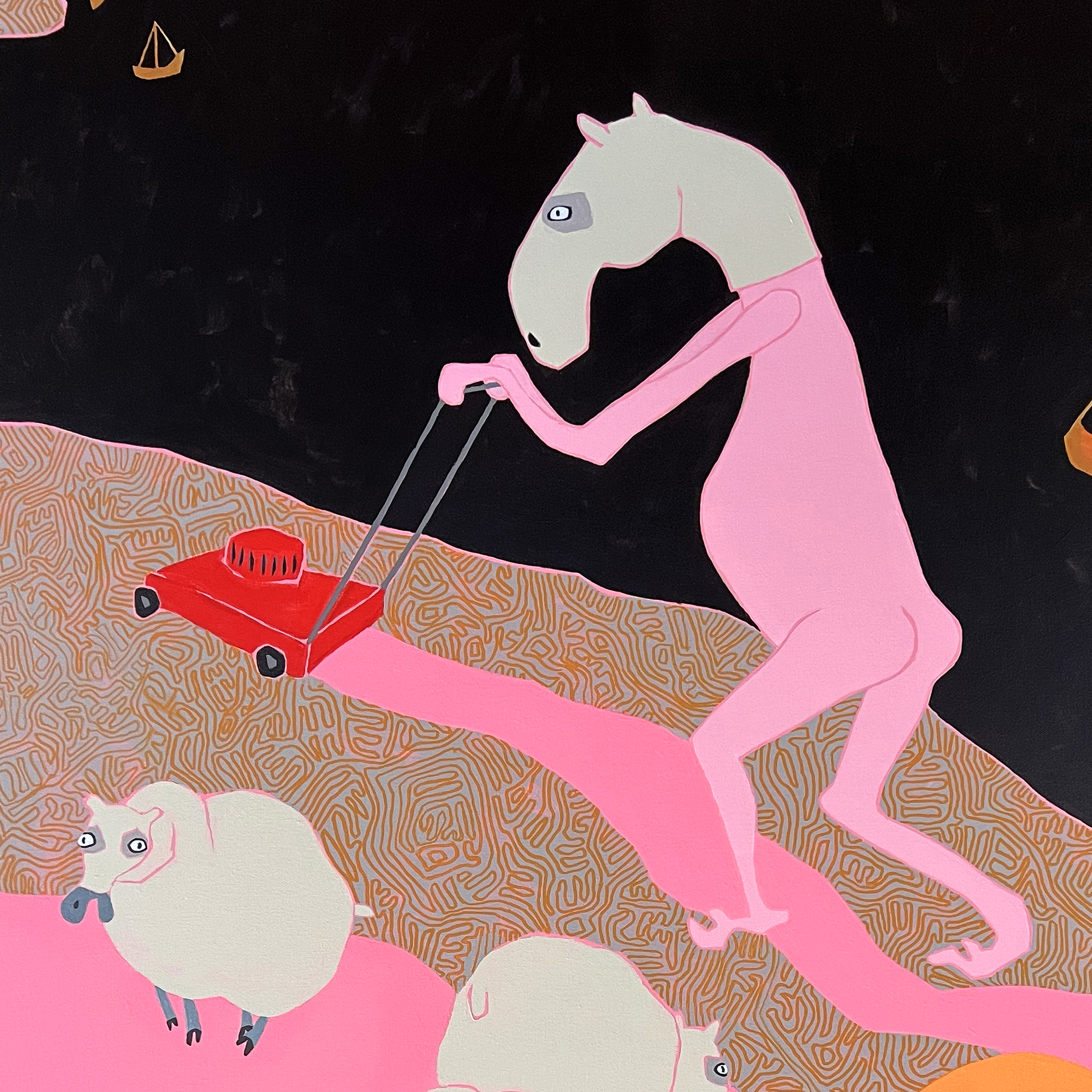
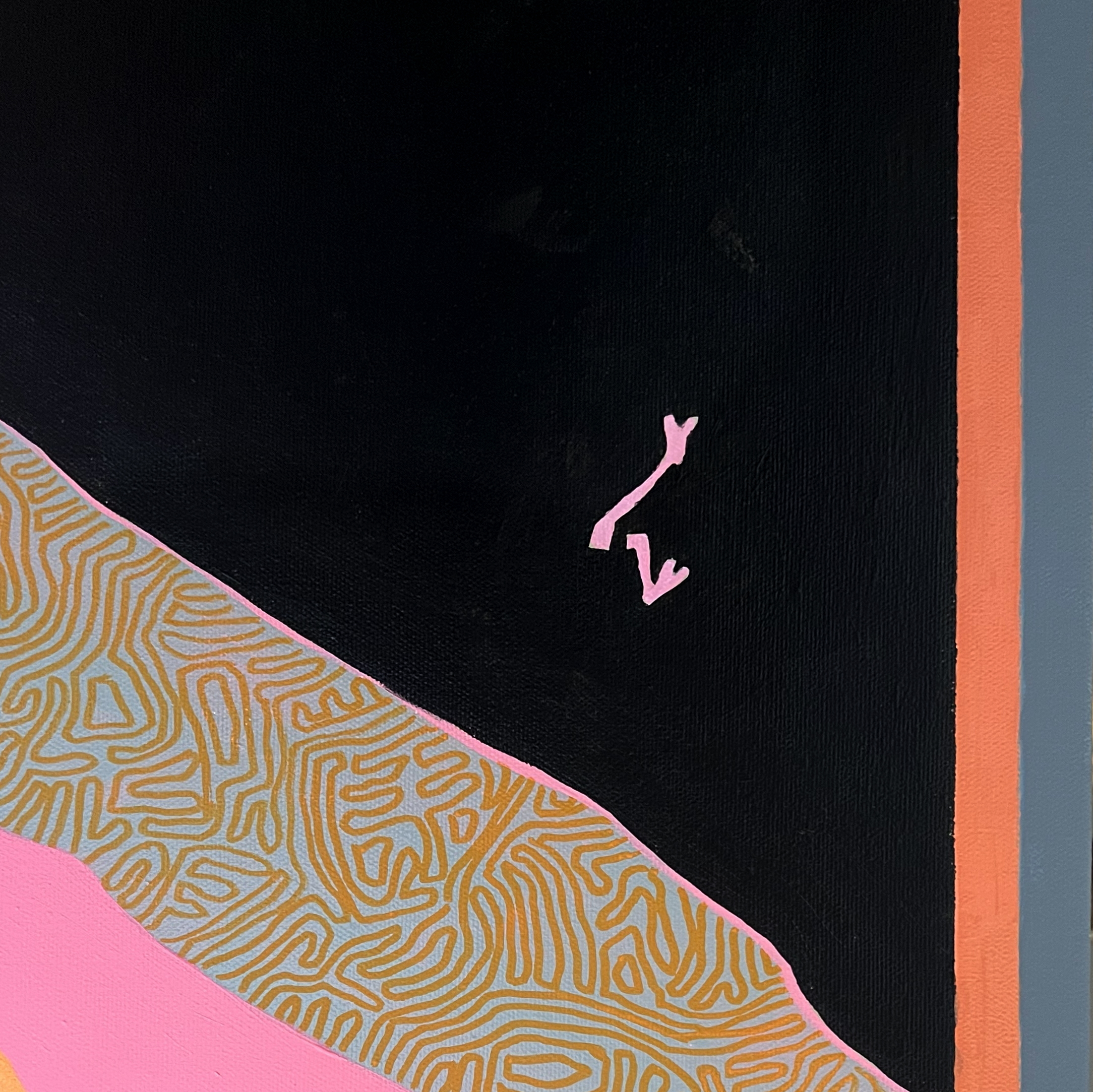
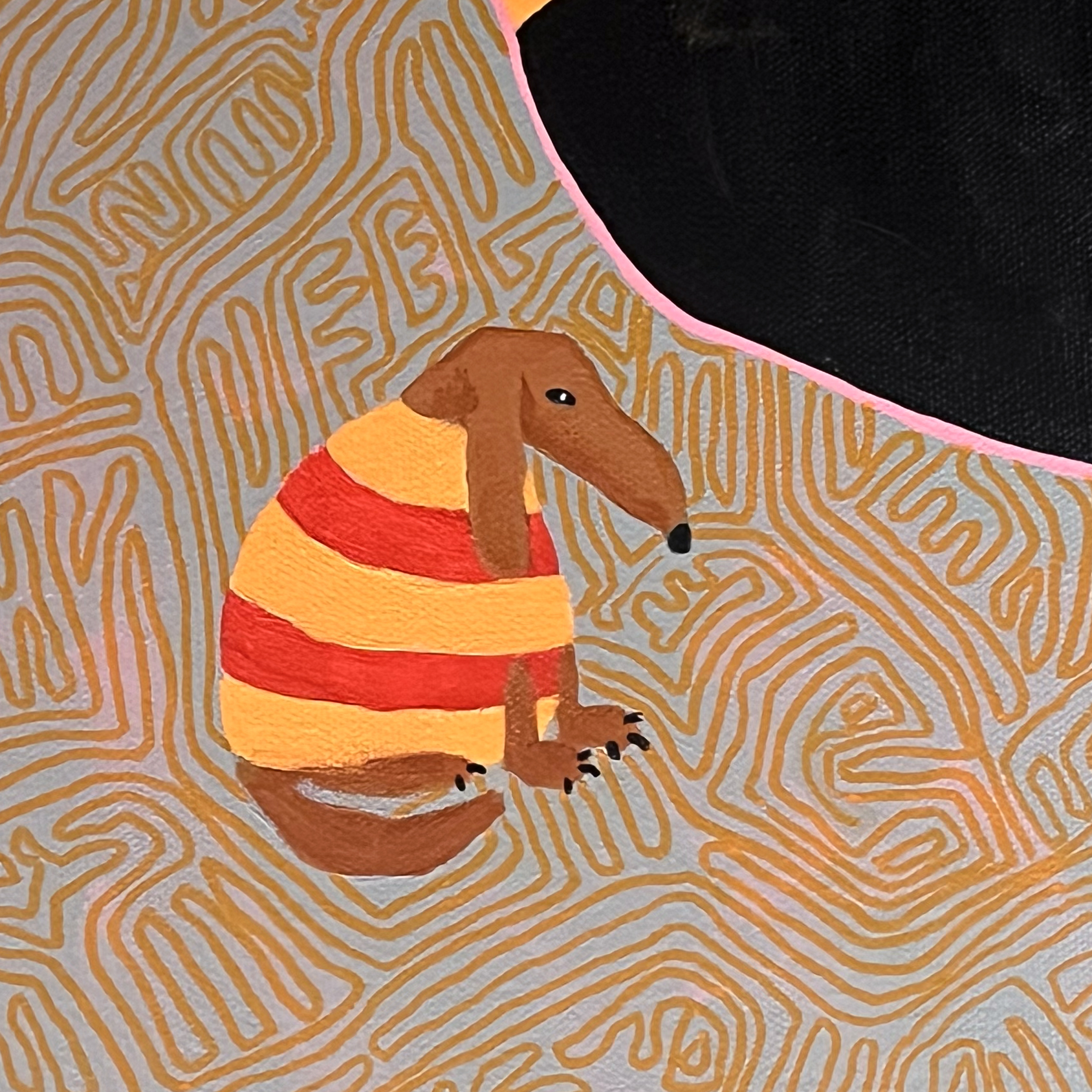
The pattern used on the unmowed foliage is my best interpretation of Alan Turing’s pattern, which he hypothesized to be the basis for the array of patterns found in nature, such as spirals, stripes & spots. Here, possibly due to ignorance or hubris, or a delightful combination of both, it is actively being mowed away to create a sea of pink for the endless herds of sheep.
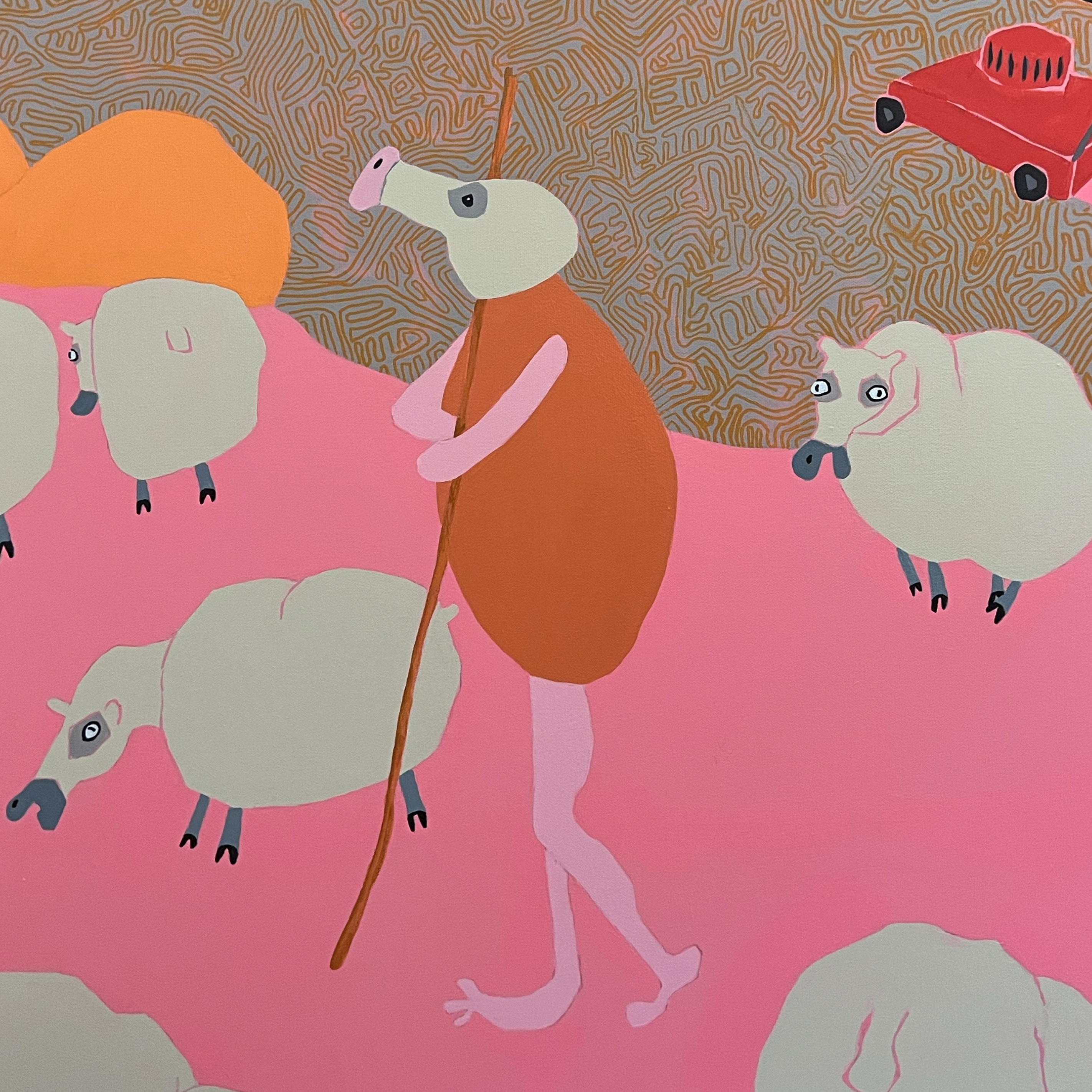
When i first started to draw this pattern, i struggled to articulate each individual shape. After a few hours, i finally realized that each form does not exist independently, but rather is in part defined by all surrounding lines, just as maybe all things are.
PMD 2026
 pink milk drink