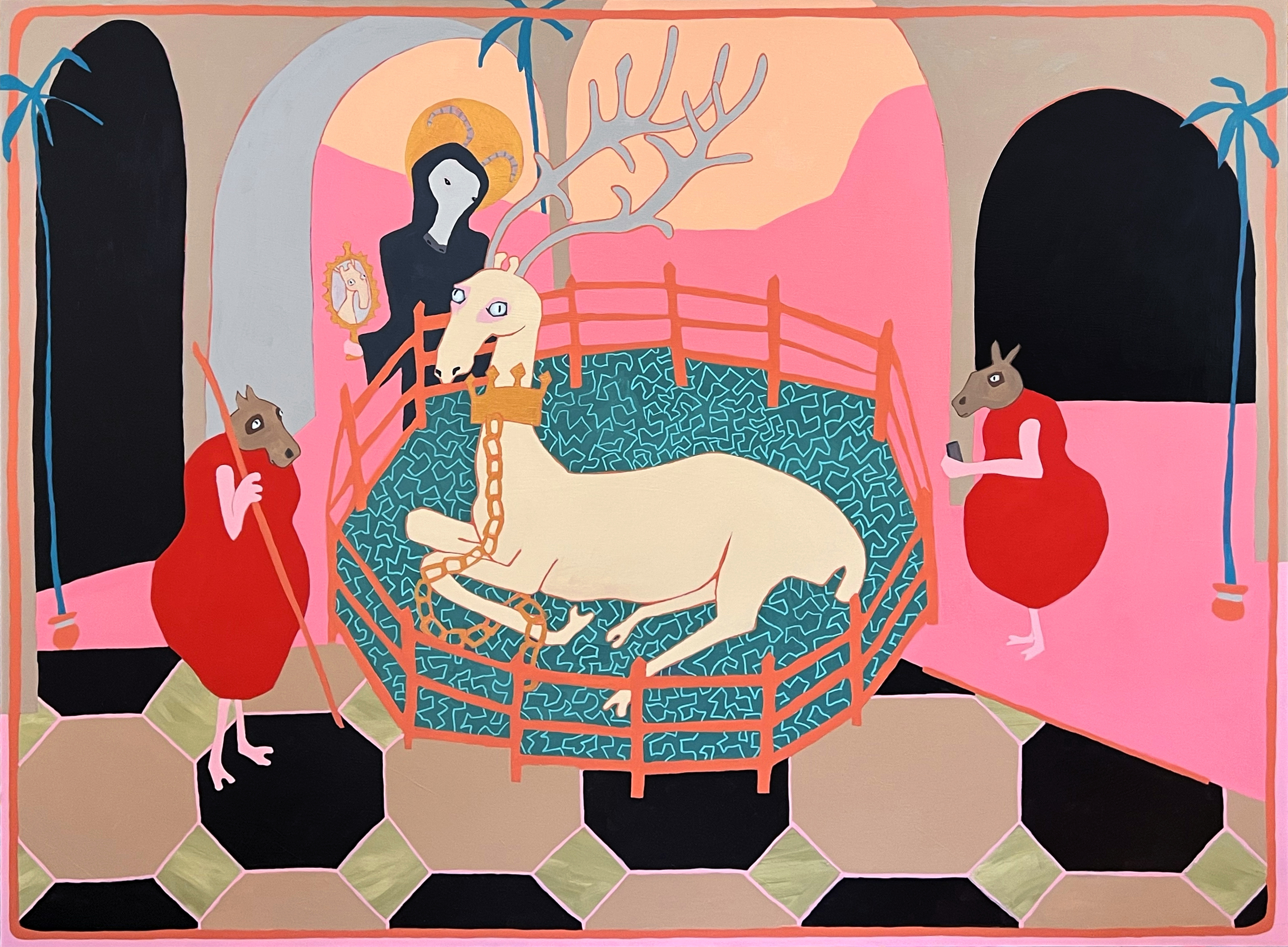
The Harbinger
76x102cm / 30×40” acrylic on wood panel, 2026
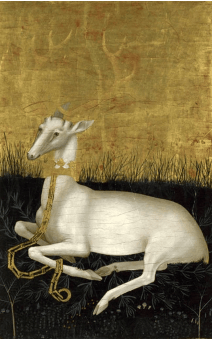
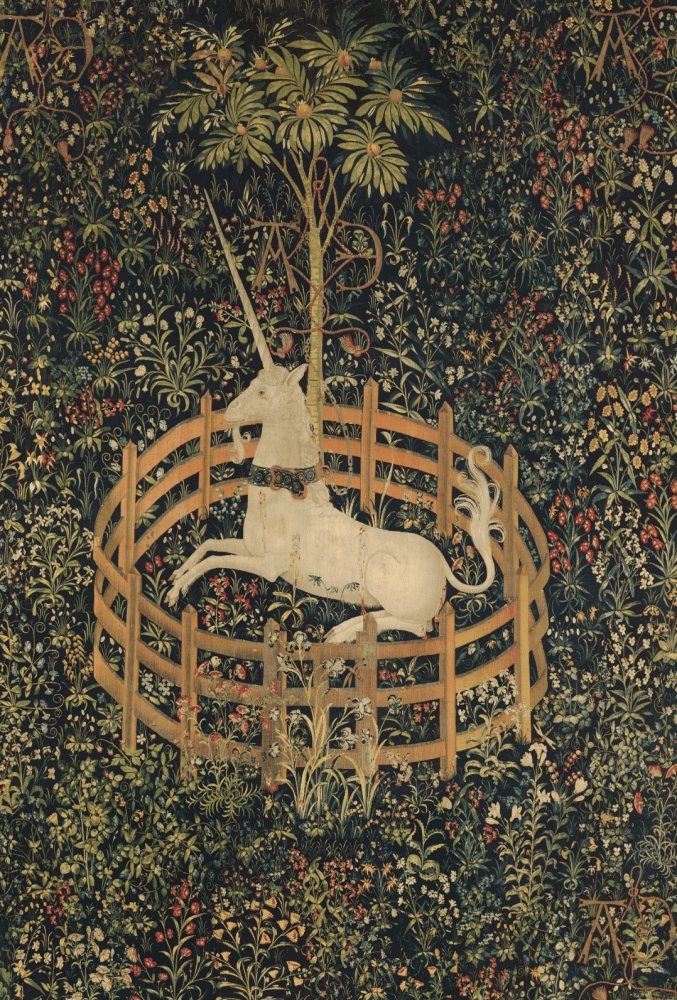
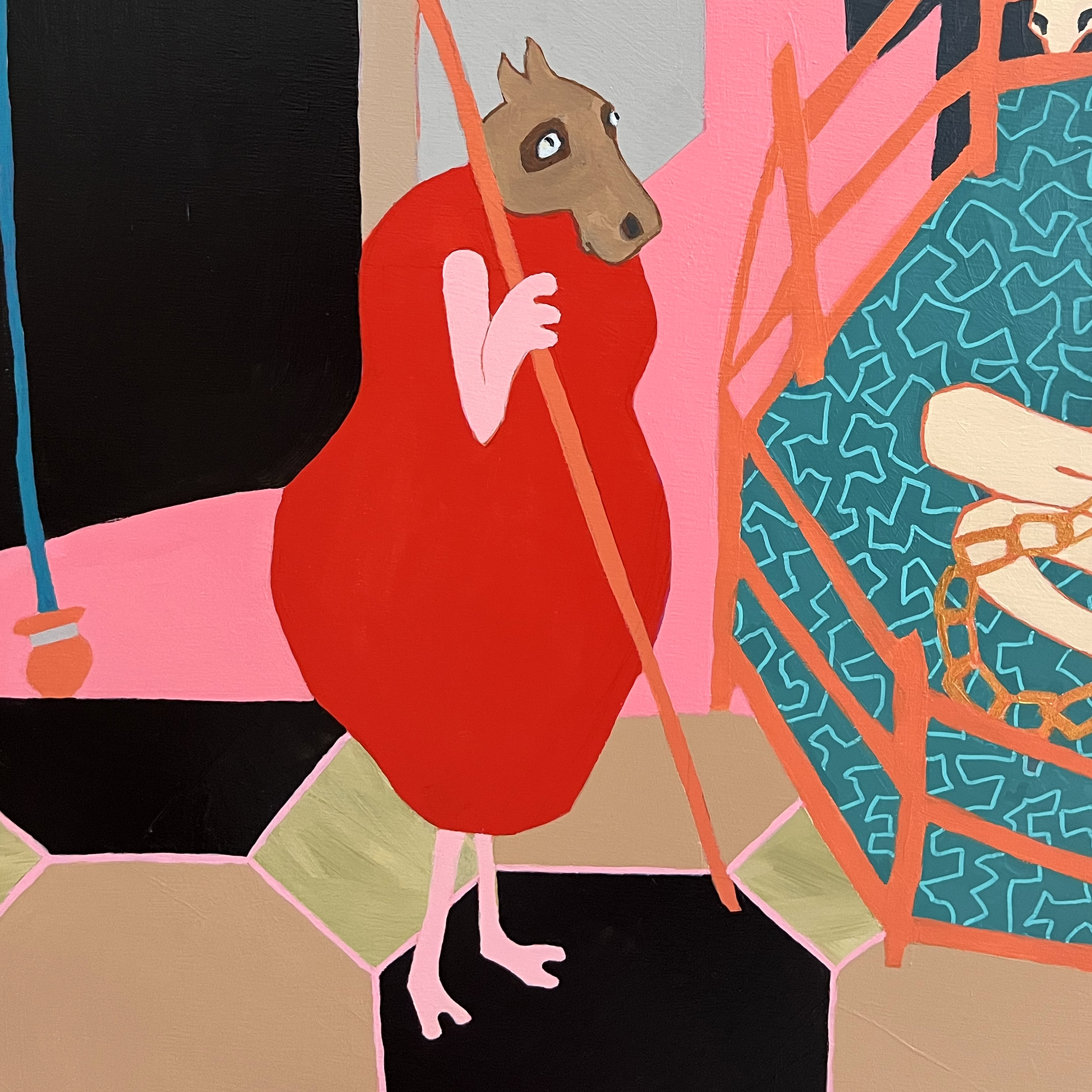
The Harbinger references both The Unicorn in Captivity from the Unicorn Tapestries, c. 1495-1505, as well as the white hart (stag) on the outer panel of the Wilton Diptych, c. 1395-1399.
In the Wilton Diptych, the white hart was the emblem of King Richard II of England. “The stag is wearing a collar around his neck shaped like a crown with a chain dangling freely from it attached to nothing. In this we see Richard’s burden of kingship is both noble and enslaved. He is enslaved not by anyone in the visible realm, but in the invisible… Richard developed a concept of kingship as more of a priesthood, which emphasized that the office came to him by Divine call and right” (Rose Weiner, The Symbol of the Stag in Medieval England).
In Celtic mythology a white stag is often interpreted as the harbinger of death — that the Otherworld is near. In other myths, both pagan and Christian, the white stag is equated with the unicorn or… a symbol of mankind’s elusive spiritual quest” (David Burnett, John William Waterhouse, The Mystic Wood).
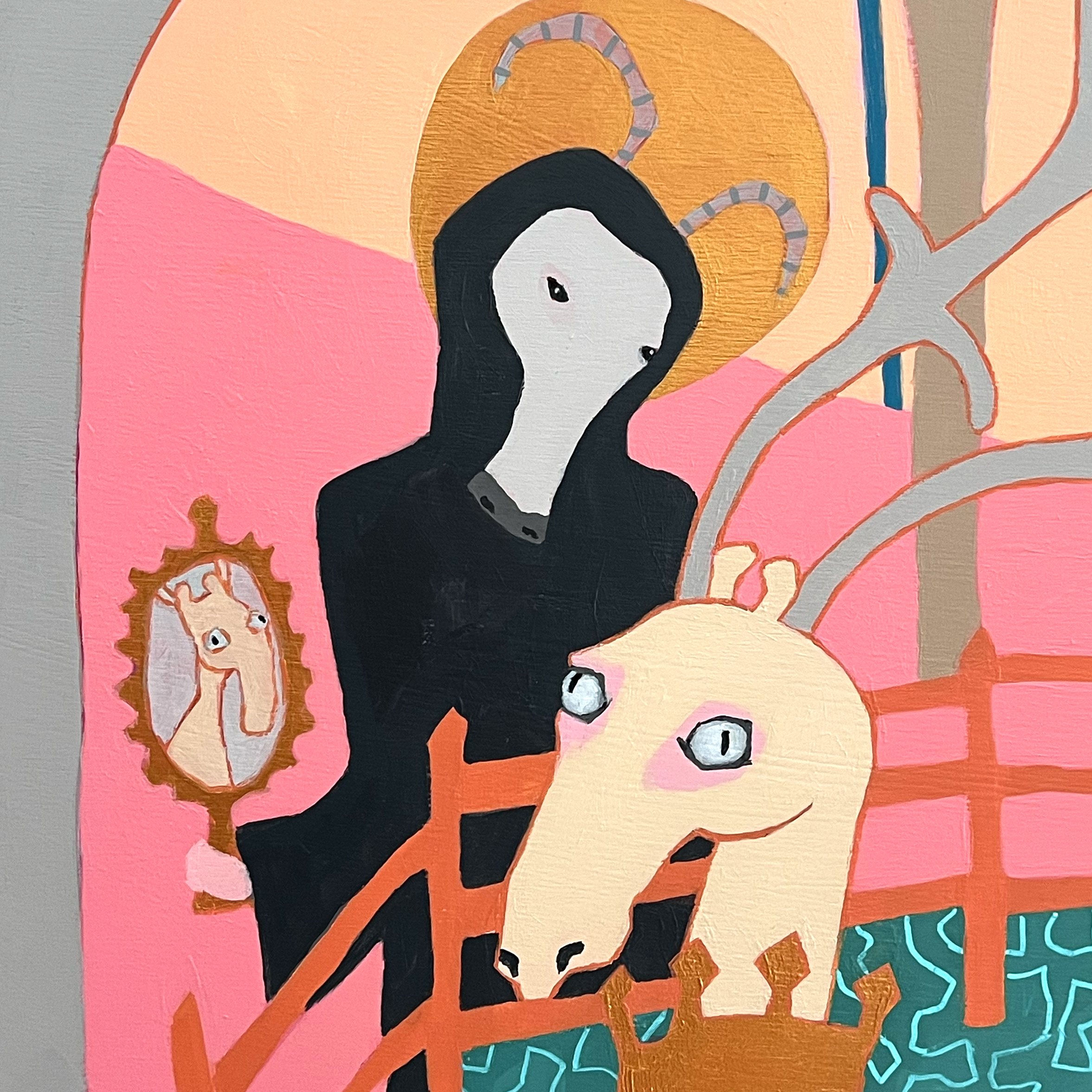
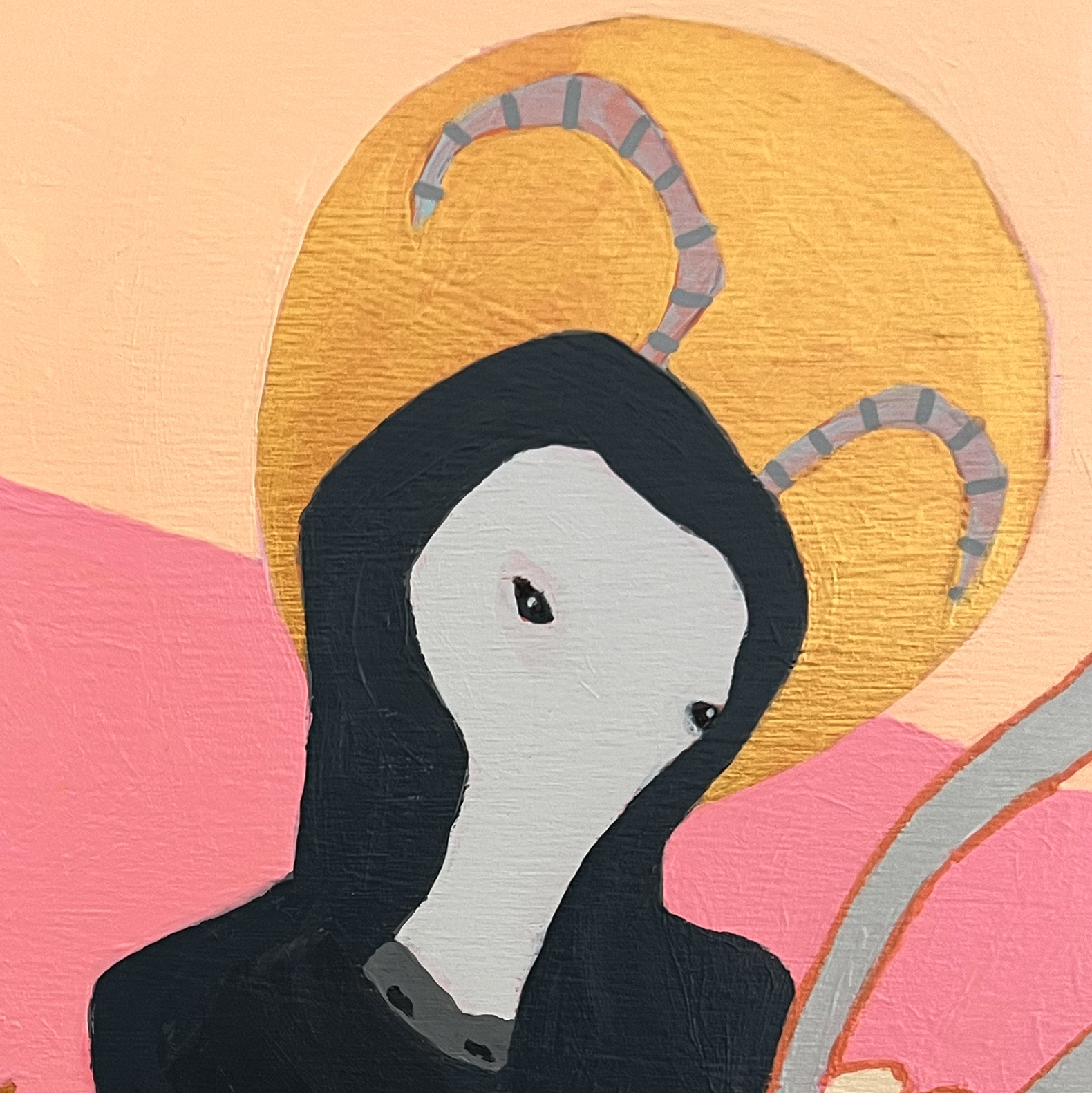
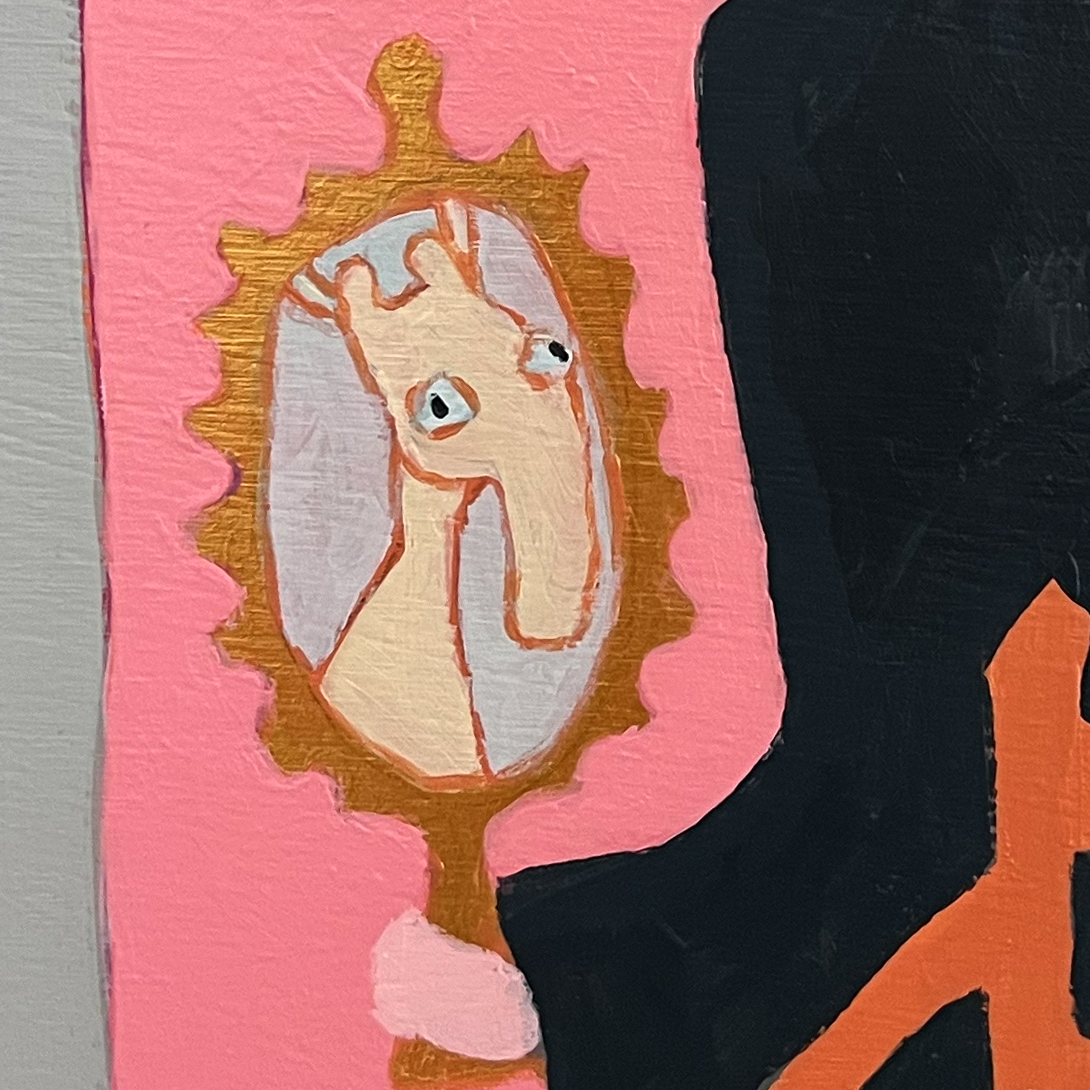
The robed figure holds up a mirror for the hart, in which he sees himself without a crown. This is a future he does not desire, for church & state are the oldest of bedfellows.

PMD 2026

